Many industries are romanticised by those on the outside looking in and the travel industry is an exemplar of this. It’s a wildly competitive industry where the grit more than outweighs the glamour. Don’t mistake me, it’s an industry I love deeply, but I suspect my friends’ perception of my former role within it – all globetrotting, champagne-sipping, jet skiing to meetings on desert islands where I’d be hosted in a 3-bedroom villa with a private pool – would only be right a measly… what, fifty percent of the time?
For 28 years I worked in senior positions, up to Product Director, for one of the UK’s largest and best Tour Operators. From the frontier days of tailormade packages when the tally of a hotel room allocation was kept in a notepad (if the ops team forgot to rub out a line representing a bed night we had a problem!), through the rise of API connectivity that allowed huge scaling of product across the globe, to the modern world of data mining, voice-to text AI analysis and bedbanks that are so big they no longer know how many hotels they actually offer.
Throughout this time, I have played a role in shaping holidays, building products and trying to understand what people want when they leave home, then devising strategies for how to sell that at scale. I’ve seen destinations rise in popularity, and fall, reinvent themselves and sometimes quietly disappear from relevance altogether. I’ve dealt with amongst other things the fall out of Avian Flu, 9-11, the Credit Crunch, the Ash Cloud, Brexit, Covid and the start of the current US-Israel-Iran War. When I say dealt with, I will stress at no time did I don a hazmat suit or a uniform.
But over time, something shifted. The industry’s focus increasingly became about scale, efficiency, and optimisation – important, certainly – but often at the expense of depth, context, and meaning. Less travel, more industry.
My Substack is, in part, a response to that.
It’s a space for me to slow things down. To look more closely. To reconnect my love of travel with story, place, and perspective.
Why Postcards?
Postcards (Dictionary definition)
A postcard is a piece of thin card, often with a picture on one side, which you can write on and send to people without using an envelope.
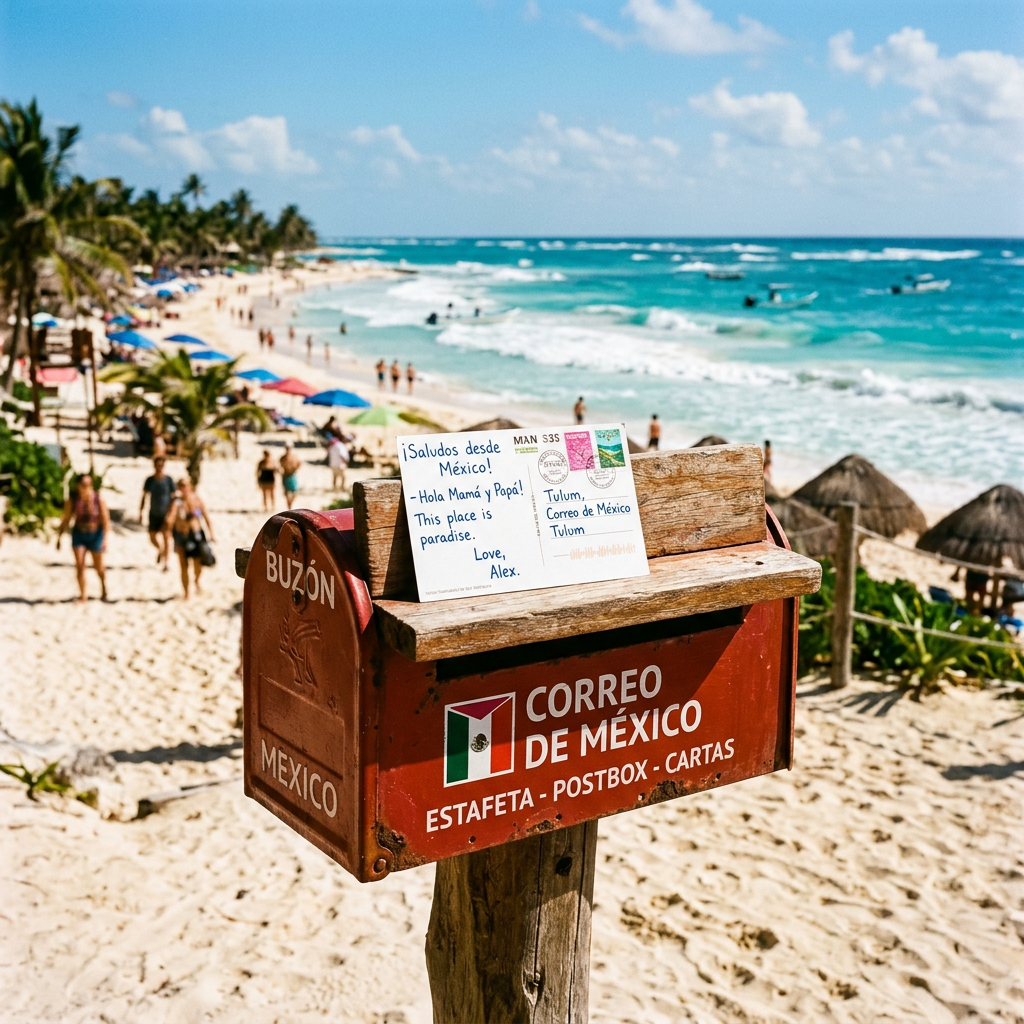
So why Postcards with Perspective? The name came very quickly to me and hopefully encapsulates what I want the Substack to be. Postcards are snapshots: the front picture offers a brief, evocative glimpse of a place; the blank reverse enables you to share your experiences, or perspective, while there. It’s these perspectives, whether history, culture, or personal that I want to focus on. The often-unseen layers beneath a place.
Postcards are, reassuringly one of the last reliably analogue forms of communication. No algorithm, no performance metrics (in fact, you are often lucky if they’re delivered to the intended recipient inside a year), just a moment, a pen and an intention to share.
Despite, the heyday of the postcard being well behind us – they first came to prominence in mid-19th century Austria – I remain more attached to postcards than most modern travellers. I have always had a slightly eccentric habit of sending postcards to my nieces and nephews wherever I travel. But instead of writing a message, I attempt to illustrate the destination and my experiences. Camels, sunbeds, the Taj Mahal, and sea otters, amongst others, have all been irreversibly mangled by my illustrative ineptitude, but I tell myself it’s the thought that counts.
I also keep a tally on how long it takes a postcard to make it back to the UK. The current longevity record is held by Mexico, which is still undelivered after 22 years. I suspect it is still in the drawer at reception at the Paradisus Playa Del Carmen. Second place, Petra, Jordan – that just took 12 months after being posted in the lobby post-box at the Movenpick Petra.

Why Perspective?
Perspective (Dictionary definition)
- A particular perspective is a particular way of thinking about something, especially one that is influenced by your beliefs or experiences.
- Perspective is the art of making some objects or people in a picture look further away than others.
If postcards are what you notice in the moment, perspective requires research (or at least a little reading) and thinking to arrive at. My industry background gives me one kind of perspective; how destinations are packaged, sold and sometimes simplified within an inch of their lives.
More interesting to me now are the layers beneath this. The history that explains why a place, or a hotel, or a restaurant looks like it does. The way culture shapes everything. The economic and social factors that influence the rise of a destination, or its decline.
Questions like why does one area feel effortlessly authentic while another feels more like its been created by committee? Why do some hotels age well and others sag into old age? Or why do trends in travel sometimes make absolute sense and at other times just leave me shaking my head and wondering whether I took the wrong pill that morning.
These are the things, along with where I can find the best Negroni and tiramisu, that I always find myself circling back to when I travel.
What’s Coming?
What can you expect from future Postcards with Perspective essays? Each piece will start small, with a hotel, street, restaurant, bar or pub – a moment. A postcard. Then it will zoom out a little, adding context and the occasional opinion. Perspective. Most pieces will be about places, but some will be about the travel industry itself. None of them will be overly long (hopefully).
Coming up soon will be an essay on a hotel in Kuala Lumpur and the history of the street it is linked to. A short piece on a London pub that may not actually be a pub. And an article about a hotel in a colonial hill station and a famous missing spy.
After that, I’ll follow up with whatever seems worth writing about.
And, occasionally, whatever seems worth drawing badly on a postcard.