Hotel Stripes, Kuala Lumpur
Rooftop bars can be the most terrible flirts, promising transcendent views, uniquely cultivated cocktails and dishes to elevate your night, if not your entire life. By comparison, Bar Tao Man, at Hotel Stripes Kuala Lumpur, under promises and over delivers.
As I climb the dozen steps from the elevator to the level of the bar, I’m met with lounge music, the sweet, umami smell of yakitori cooking over coals in the little food station alongside the bar and, across the slender rectangle of an infinity pool, the sight of the KL skyline brightening with lights as dusk falls.
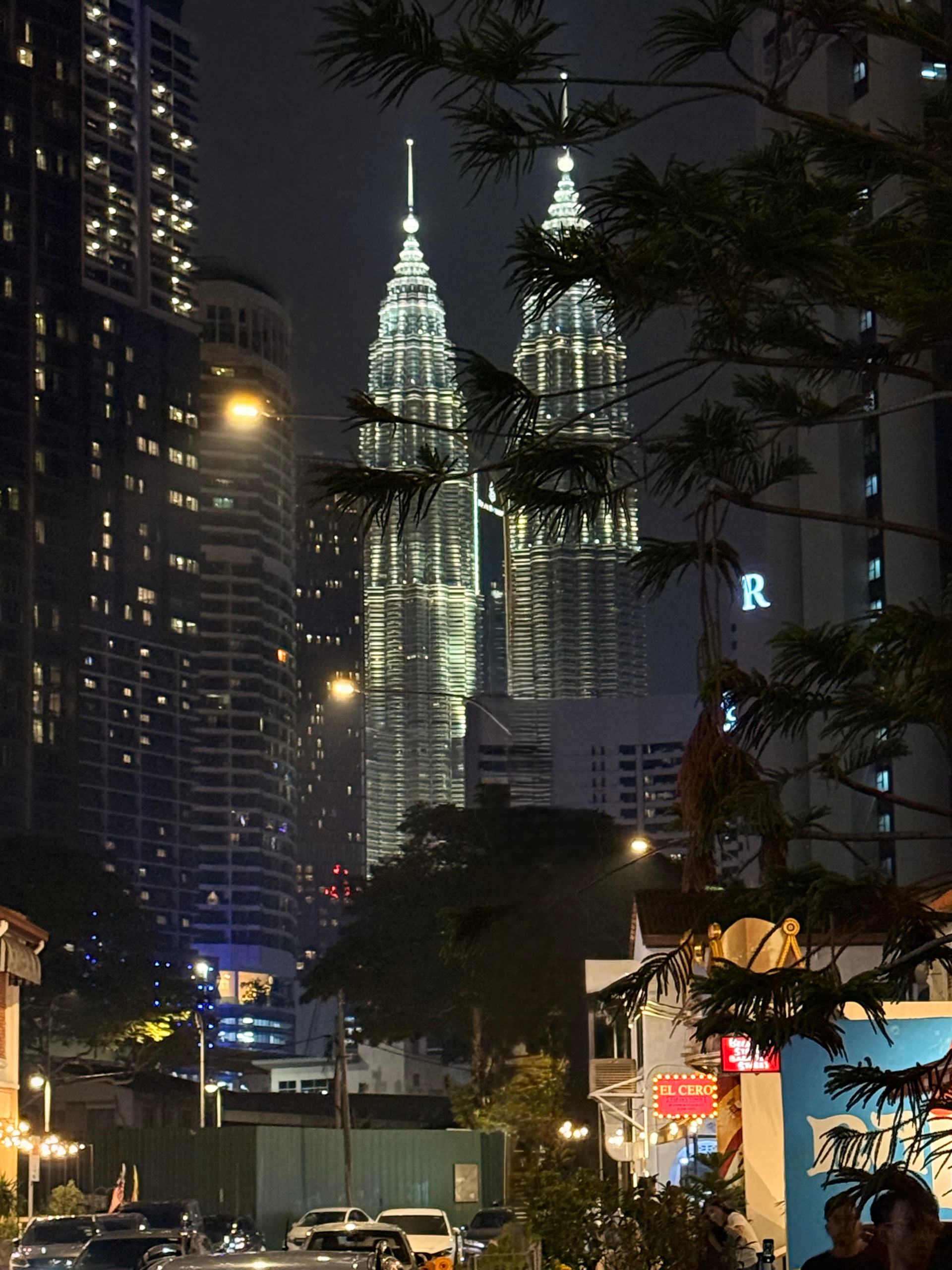
I’m impressed. Twenty-two floors up I am treated to a panoramic view of the modern, high-rise KL. Front and centre is the KL Tower, lit green as a goblin, a monumental column of concrete topped by a viewing deck that resembles a UFO from a 1950s sci-fi film. Beyond this rise more angular steel and glass titans of this rapidly evolving metropolis.
Our drinks and food arrive and our waiter, Sanim, offers to take our picture. He contorts himself in a series of Mr Bean-like poses, as he taps settings, raising and lowering the phone to catch our inescapable beauty (or perhaps desperately searching for it). At one point, I fear he’ll step back into the pool or lean too far over the railing, tumbling to the streets below.
I join him at the railing to retrieve my phone and lean out, peering down at Jalan Kamunting and the surrounding streets. “Old,” says Sanim, nodding as if this is explanation enough. And indeed, I can see an altogether different, older and low-rise Kuala Lumpur clustered around the hotel – these streets have a story to tell.
Tin and Fire

In the 1860s the streets around Hotel Stripes were a lawless, frontier tin mining town, all muddy streets, mosquitoes, gambling pits, opium dens and prostitution, ruled over by perpetually warring Chinese secret societies. The town sat at the location where the Klang and Gombak Rivers slapped into each other, giving rise to the name Kuala Lumpur, or Muddy Confluence.
Buildings in the nascent city were wood and thatch up until a catastrophic fire in 1881 destroyed large parts of it. In reaction, the authorities decreed that all new buildings in the reconstruction had to be constructed from brick and tile to guard against a repeat and the masonry shop houses that survive today are a result of that catastrophe.
A short walk from the hotel, past local restaurants where families sit on low plastic stools eating and past white walls decorated with colourful street art depicting traditional city and rural life, you will find The Row. This quiet, tree-shaded street is built in the shophouse tradition that the fire made law.
Reinvention

Across the years, the street has seen many changes, starting out as residential shophouses, before changing to trading businesses and then a brief stint during the early 2000s as a nightlife strip called the Asian Heritage Row. Now it’s been reinvented again as a home for modern cafés, restaurants and creative businesses.
In a city where much history has been built over, The Row retains the original brick and tile structures and the distinctive five-foot walkways. These pretty, ornate covered walkways were built to protect citizens from heavy rain and the ravages of the sun and are now used to shelter diners at The Row’s restaurants and boutique shops.
On my first morning in the city, I sit outside a coffee shop in dappled sunlight planning my day and watching locals hurry off to work. The nearby throb of KL’s traffic is muted. In the next-door Batik Boutique, an award-winning social enterprise, I browse racks of colourful shirts and souvenirs. As a self-confessed stationery addict, I am unable to resist purchasing a stunning batik notepad.
On Jalan Kamunting itself is an eclectic bunch of buildings and eateries. Next door, opposite the B Sarang Suite Hotel which is studded with AC units and decorated in bands of ochre and cream like a giant tiramisu, stands the wonderfully named Woo Pin Fish Head Noodles Restaurant. A minute further along, draped in flowers with a patio decorated with murals is the highly recommended Budaya restaurant serving modern Malaysian cuisine.
At the end of the street, behind its ornate gates, squats the famous Yut Kee Restaurant specialising in Hainanese-Western food, a hybrid cuisine that came into being during the British Colonial period, with dishes like pork chops and brown gravy and roti babi (deep-fried pork sandwiches). The restaurant is renowned for its authentic atmosphere, regular customers, tile floor and fans rotating lazily above, but during my stay it seems given over almost entirely to very large Chinese tour groups, leaving little room for the casual diner. I fear it may have been eaten by its own reputation and suffered the same kitsch fate as many once authentic experiences. Such is the fate of much modern tourism.
The New Layer
Hotel Stripes was opened by the Malaysian-owned YTL Group in 2017 and the desire for the hotel to be part of, and pay homage to, the district’s history of reinvention is apparent in everything from the hotel’s name to its design. The name Stripes, and the slatted architecture adorning its exterior, reference the local shophouses’ shutters and awnings. Large historic pictures decorate public spaces and rooms, where you look out through the ‘stripes’ to the city beyond. In the lobby you can grab a handful of traditional sweets – White Rabbit Creamy Candies, Haw Flakes and Sugus Soft Candy – from glass bowls that would have been found in local kedai (shops).
Back in Bar Tao Man for a nightcap, looking out at the changing colours of the glass, steel and concrete skyline, I wonder about the permanence of these towers, and whether their story will be preserved and told. Cities often erase their past as they grow. On Jalan Kamunting, it survives in layers — from tin miners to shophouses to a boutique hotel that quietly tells the story of the street beneath it.